

Introduction: Understanding the Art of Poem Analysis
A poem analysis essay is your gateway to unraveling the depth and complexity of poetry. It goes beyond mere appreciation, delving into the heart of the poet’s intent, themes, and artistic choices. By analyzing poetry, students can uncover layers of meaning hidden within the words, gaining a richer understanding of both literature and human expression.
The primary objectives of a poem analysis essay include examining the structure of a poem, identifying themes, interpreting tone, and exploring the use of poetic devices like imagery, symbolism, and metaphors. Each of these elements plays a critical role in shaping the poem’s impact and delivering its message.
This guide will provide you with everything you need to craft a compelling poem analysis essay. From how to analyze a poem step-by-step to using examples for inspiration, you’ll learn the essential tools to break down any piece of poetry. Whether it’s the poem format or the subtle nuances of tone, mastering these skills will elevate your literary analysis and writing proficiency.
So, grab your favorite poem, and let’s dive into the intricacies of understanding and appreciating the art of poetry. By the end, you’ll have the confidence to craft structured essays that not only impress but also resonate with your readers.
Step-by-Step Poem Analysis Essay Guide for Students
Understanding the Art of Poem Analysis
A poem analysis essay is a powerful tool in literary studies, enabling readers to uncover the deeper meanings hidden within poetic lines. It’s not just about understanding the words; it’s about dissecting the structure of a poem, exploring its themes, and interpreting the tone and emotions conveyed by the poet. Such essays foster a deeper appreciation for the artistry of poetry and help students refine their critical thinking skills.
The objectives of analyzing poetry go beyond the surface. By examining elements like poem format, literary devices, and historical context, students can draw connections between the poet’s intent and the reader’s interpretation. This guide will walk you through the process, offering tips, examples, and actionable steps to create a compelling analysis essay.
Whether you’re analyzing imagery, decoding metaphors, or unraveling complex themes, this guide will equip you with the tools needed to master poetry analysis. Ready to explore the art of how to analyze a poem? Let’s dive in and unlock the secrets of poetic expression.
The First Steps in Poetry Analysis
Read and Annotate
The first step to effectively analyzing a poem is reading it multiple times. Poetry is layered, and its depth often becomes clearer with each read. As you go, annotate the text—underline striking phrases, highlight repetitions, and note any unfamiliar words or phrases. This practice not only helps in understanding the poem’s structure of a poetry but also prepares you to dig into its core themes and devices.
Understand Context
Every poem is a product of its time, influenced by the poet’s life, cultural background, and historical events. Take time to research the poem background, including the poet’s biography and the era in which the poem was written. Ask yourself: Who was the intended audience? How might historical events shape the poem’s message? This context is crucial for interpreting the poem’s true meaning.
Identify Poetic Devices
Poetic devices are the heart of any poem. From metaphors and similes to imagery and alliteration, these elements add depth and texture to the work. When you analyze a poem, pay attention to how these devices are used to evoke emotions or emphasize themes. For instance, does the poet use imagery to paint a vivid picture or repetition to underscore a point? Documenting these insights will strengthen your essay’s analysis.
By following these preparatory steps, you’ll have a solid foundation for creating a thorough and insightful poem analysis essay. Now, let’s move on to crafting a structured analysis.
Crafting the Perfect Poem Analysis Essay Outline
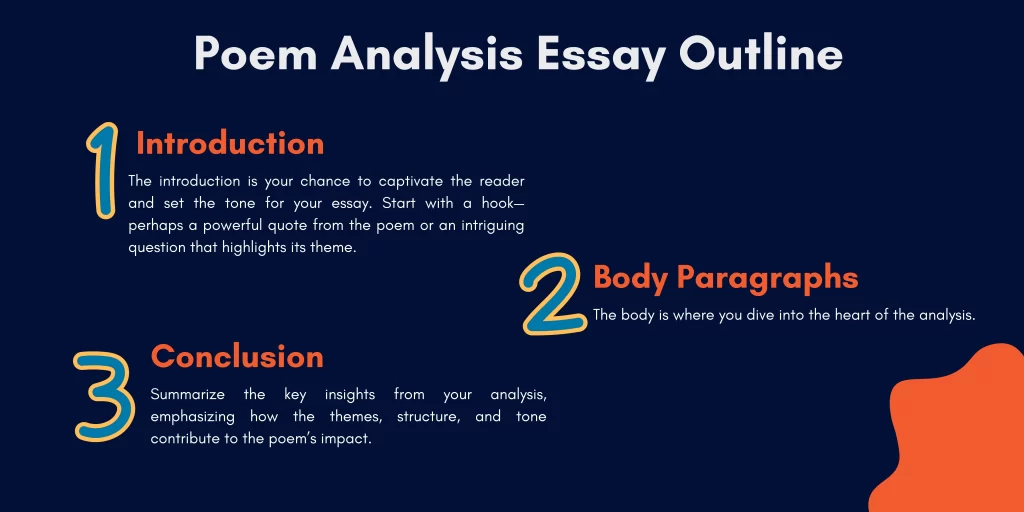
When it comes to writing a poem analysis essay, structure is everything. A clear and logical outline ensures that your essay flows seamlessly while addressing all key aspects of the poem. Here’s how to craft an effective poem outline to guide your analysis.
Introduction
The introduction is your chance to captivate the reader and set the tone for your essay. Start with a hook—perhaps a powerful quote from the poem or an intriguing question that highlights its theme. Follow this with some background information, such as the poet’s name, the title of the poem, and its historical or cultural significance. Finally, present your thesis statement, a concise declaration of your essay’s focus. For instance: “This essay examines the themes of resilience and nature in Robert Frost’s ‘Stopping by Woods on a Snowy Evening,’ exploring its structure and tone to reveal the poet’s deeper message.”
Body Paragraphs
The body is where you dive into the heart of the analysis. Divide your discussion into multiple paragraphs, each focusing on a specific aspect of the poem:
- Themes: Dedicate one paragraph to discussing the central themes of the poem. For instance, if the poem deals with love or mortality, analyze how these ideas are expressed through imagery, symbolism, or diction.
- Structure: In another paragraph, analyze the poem’s format, including its rhyme scheme, meter, and stanza arrangement. Discuss how these elements enhance the overall meaning.
- Tone: Lastly, explore the poet’s tone and how it shapes the reader’s experience. Is the tone reflective, celebratory, or somber? Use examples to illustrate your points, as seen in many poem analysis essay examples.
Conclusion
Your conclusion should tie everything together. Summarize the key insights from your analysis, emphasizing how the themes, structure, and tone contribute to the poem’s impact. End with a thought-provoking statement that underscores the poem’s significance, leaving the reader with a lasting impression.
By following this analysis essay outline, you’ll create a cohesive and insightful essay that captures the essence of the poem while demonstrating your critical thinking skills. A well-structured essay not only impresses your audience but also elevates your understanding of poetry.
Master the art of poem analysis essays with the assistance of our best essay writing services. Learn how to analyze poetry, structure essays, and ace your assignments effortlessly!
Learning Through Examples: Poem Analysis Essays
Analyzing poetry allows readers to uncover hidden meanings and appreciate the intricate craftsmanship of the poet. Below are three poem analysis examples that demonstrate how themes, tone, and structure create a deeper understanding of the text.
Example 1: Analyzing “The Road Not Taken” by Robert Frost
Robert Frost’s “The Road Not Taken” explores the theme of choices and their consequences. The poem’s central metaphor—a diverging path in the woods—represents life’s critical decisions. Frost uses imagery, such as “yellow wood” and “leaves no step had trodden black,” to evoke a sense of ambiguity and nostalgia. The poem’s tone is reflective, underscoring the speaker’s contemplative nature about the road not taken. This analysis reveals how Frost masterfully weaves universal themes with vivid imagery to resonate with readers.
Example 2: “Still I Rise” by Maya Angelou
Maya Angelou’s “Still I Rise” is a powerful declaration of resilience and empowerment. The poem’s repetitive refrain, “Still I rise,” conveys an unyielding spirit against oppression. Angelou employs figurative language like similes (“like dust, I’ll rise”) and metaphors (“I am the dream and the hope of the slave”) to emphasize themes of strength and triumph. The poem’s tone is unapologetically defiant, making it an anthem of empowerment. This poem analysis example highlights how Angelou’s tone and choice of words inspire readers to embrace courage and perseverance.
Example 3: “Ozymandias” by Percy Bysshe Shelley
Percy Bysshe Shelley’s “Ozymandias” examines the impermanence of power and human legacy. The poem’s theme is encapsulated in the crumbling statue of a once-mighty king, symbolizing the inevitable decline of all empires. Shelley’s use of a sonnet structure and vivid imagery, such as “two vast and trunkless legs of stone,” underscores the fleeting nature of human achievements. The poem’s reflective tone invites readers to ponder the transience of greatness. This poetry analysis essay demonstrates how Shelley combines form and content to deliver a timeless message.
By studying these sample poem analysis essays, students can see how to dissect themes, tone, and structure effectively. Whether exploring Frost’s reflections, Angelou’s empowerment, or Shelley’s impermanence, each poem offers a unique lens through which to appreciate the art of poetry.
Final Thoughts on Writing Poem Analysis Essays
Mastering the art of poem analysis is a valuable skill for both literary studies and personal enrichment. By examining a poem’s structure, tone, and theme, you gain insights into the poet’s intentions and connect with the universal emotions conveyed through their work.
To become proficient, practice regularly with diverse examples. Understanding the analysis of the poem will not only improve your writing but also deepen your appreciation for poetry.
For expert guidance, Quick Edu Help offers professional support in crafting compelling poetry essays, ensuring your interpretations are both insightful and eloquently presented. Reach out today to elevate your writing!